Wednesday, February 18, 2009

Contribution of Computers and Internet to Economic growth


Also appears in: http://econjournal.com/2009/02/11/contribution-of-computers-and-internet-to-economic-growth/

How come we see the computer revolution everywhere except in the [aggregate] productivity statistics?

- Robert M. Solow, Winner, 1987 Nobel Prize for Economics (Sveriges Riksbank Prize)

imageComputers, Internet and mobile phones have fundamentally changed our life the last 2 decades. We could do more efficient shopping, connect to a lot more people and be more productive at work. As an engineer who have been a part in developing an Operating system, a search engine and a social networking tool  - the three main products of this revolution, I feel they are great things to both build and to use. They make individuals much more productive looking at the micro level. However, looking from an economic point of view and see the Macro picture I’m bogged down with “Show me the money”. Economists of the 1980s and 90s have debated a lot about this and suggested that they may not have caused a lot of economic growth.  As this review shows, the economists of late 80s successfully argued that this paradox is due to “mismeasurement, lags, redistribution and mismanagement”.

However, over a long period of time you should see the effect in economic growth, as the indirect effect of the productivity increases reflect in the macro economy. And things have changed since the original “productivity paradox” came, as PCs came into the living room and internet connected the ordinary people to do their mundane stuff in networks originally designed to survive nuclear attacks.So in this decade, have the powerful PCs, Smartphones, Search engines, Facebook led an explosive economic growth? In reopening the debate and looking at the recent data, there still seems to be dismal evidence for the productivity growth from the modern revolution. It is possible that the economy might have reached a saturation as a $10 trillion economy cannot continue to be sprinting like a $1 trillion economy, but still 1.7% annual growth in per-capita income since WWW came seems less. There might be other small causes too. The article concludes with what might be a possible cause for this.

Where do US Universities spend their money?


Also appears in EconJournal

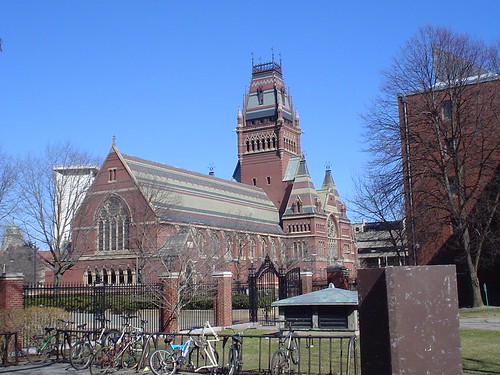
Cambridge - Memorial Hall, Harvard University by bunkosquad.Have you ever wondered where do the money from your tuition go? How do the universities spend their money? Why does the cost of tuition grow 2X  more than the inflation rate? Why are the US universities extremely inefficient and uneconomical? I didn’t find any other study and workable stats on university spending in the net, so I just made a small exploratory study on how universities spend money.

Organization of this essay:

Part 1 concerns endowments, Part 2 contains analysis on a private University (Harvard) and Part 3 contains analysis on a public university (UW) and Part 4 is the initial conclusion. If there is enough audience interest, I will go deeper into this problem in further posts.

I started from this chart from my earlier post and started digging where the universities spend their money in.

Tuesday, February 17, 2009

My 2020 Wishlist

New Gold Dream... by law_keven.1. Economical solar power (less than $0.05/kWh)

2. Economical water desalination (less than $0.001/gallon)

3. 100% global literacy

4. Democracy and Law & Order returning to Sub-saharan Africa

5. Poorest countries of developing world getting within a factor of  ½  or more of developed world’s per-capita income (around $40K/yr)

6. Significant protection of coral reserves & tropical forests and help rebuild the damage to nature

7. Reversal of global warming using the cheap energy from #1

8. Eradication of most preventable, communicable diseases (including Polio, Malaria, Cholera, Tuberculosis and Typhoid)

9. Programmable homes, enabled by Nanomechanics, to enable changing in color, structure and other physical properties on demand, and making homes extremely cheap, mass producible and still satisfy consumer choices

10. Foldable, collapsible cars that can completely compact on demand (you can park the car in the closet) and give options to hold from 1 to 10 passengers, with adjustable sizes, and passing all the crash tests.

Header Image from: http://www.flickr.com/photos/66164549@N00/2455160742/

Tuesday, February 10, 2009

H1b and Innovation

Here is an interesting paper on H1b and the contribution to innovation.

http://www.hbs.edu/research/pdf/09-005.pdf

clip_image008

It’s a pretty long paper and some parts of it are too technical. So, I have reorganized into two main themes and summarized the contents below.

Monday, December 22, 2008

London Trip, 2008: Part III - local trips

The first day I spent mostly in getting to know the underground network. By the time i reached the hostel from airport, it was already 2pm and have only 1 more hour of sunlight left. So, after relaxing for 5 min and taking a relaxed shower, I visited St. Pancras - a kind of Central station with a great architecture and then after hanging out a bit, I directly went on to Royal Opera near Covent Garden. I had already booked a premiere show for "Thief of Baghdad" - a dance theatre. I got a good seat in the front for just 16 pounds and that is lucky. This is the first dance theatre I'm visiting, and there were no songs and not much emphasis on music. It was focused more on choreography and aerobics. I will explain more on the art elements, in another dedicated post. The theatre ran between 7:30 to 9:30, and then hunted for restaurants. Couple of restaurants turned me away as it was a crowded time and finally found an Italian pizza place.

The second day, I started my day with London School of Economics near Holbourn station. I reached the school by around 10:30 and walked around the campus. The campus was not too impressive given the fact that it is the world's central place for humanities education, but it was right at the center of London. I went around the facilities a bit, talked for a few minutes with an admission consultant. At around 12:15 I left there and headed off to the railway station to go to Oxford. I went to the wrong station - St. Pancras, and then had to detour to Paddington that connects to other places in Southern England.The train to Oxford was late and after waiting for an hour (for 1 hour long trip), I finally boarded the express train at 2pm and reached Oxford at 3. I was immediately welcomed by a cold rain (around -5C) with strong gusts of wind and a setting sun, and it was pretty uncomfortable. And to add insult to injury, I couldn't find a way to reach the university. As usual I went under-prepared with no address and was walking randomly. Finally, one guy pointed me to the Said Business school and reached there at 3:30. The admissions officer took me around the school and I was very impressed with the facilities. Of all the MBA schools that I have visited - Yale, Columbia, LSE and Oxford, Oxford impressed me the most.

I boarded the train from Oxford at 4:30 and it was a slooooow train. I reached London at 6:30 and headed to British national opera, for the Ballet - "Sleeping beauty". This is the first ballet I visited and it was incredible. It was so brilliantly choreographed with a dozens of hot chicks in varied movement playing the traditional story of sleeping beauty. It was a very long show at 3 hours with 2 interval breaks, but they conveyed the entire fairly tale with no song or dialogue or voice of any kind. After the show, I quickly finished a Pizza and headed home.

The third day started with rain and cold winds and pretty much usual London weather. But, I still braved for a walking tour around London guided by New Europe tours. This is a free tour conducted in many parts of Europe and next time I visit a European city, I will make it a point to find them. We started near the Hyde Park Corner at 11am with the memorial for Lord Wellington, an Army general who faced Napolean and started walking to Buckingham palace, then stopped outside Prince Charles' house, proceeded to St. James' place - an old palace for royal family where visiting ambassadors take their briefs, and walked through Pall Mall - a famous residential area. We then saw Florence Nightingale's memorial, the famous Trafalar square (where Londoners gather for any celebration), Victoria memorial and then the Big ben, Parliament house and WestMinister Abbey (where the royals are crowned and buried for last 1000 years and also housing the graves of Darwin, Newton, etc). We went all the walking (in total more than 2.5 miles) and the guide was giving us history lessons about royals and wars and all the way.

The tour ended at 2 and I was frozen by then. I went to a souvenir shop to buy trinkets to folks back home, and then went to war interiors of National Art Gallery near trafalgar square. I went around the exhibits to see Van Gogh, Monet, Renoir and few other great Painter's famous works. After about 1.5 hours, I took the train to British Museum. I wanted to see Peacock throne, Kohinoor diamond and other precious Indian treasures stolen from India. Unfortunately their Indian gallery was closed the week I visited for renovation :(. So, I walked around Egyptian mummies, some European artifacts, and pieces of historical work from Nicobar, Central America and elsewhere. I had just 1.5 hours to visite the museum and was tired from whole day of walking. So, I didn't see enough stuff. From the museum, I directly proceeded on to Queen's theatre near Piccadilly circus station for the famous musical - "Les Miserables". On the way, I had my portrait drawn by a painter.

Les Miserables was the most incredible theatre performances I have ever seen. It was set with the background as French revolution with emphasis on class differences and sufferings suffered by common people, including young children. I will do a detailed post on this.

The last day of the tour, I spent on a walking tour in old London. I walked around River Thames, spending time near London Tower Bridge, London Bridge, Tate Modern art museum, St. Paul's cathedral. At the end, I visited Trafalgar square and Big ben to take pictures (the previous day I could not, because of the rain).. I planned to go for a Jack the Ripper tour to see the poor part of London, but didnt do as I wanted to conserve energy for the next day's journey to India.

London Trip, 2008: Part II - Astor Hyde Park Hostel

I came to London on the 11th of December 2008 with the BA48 flight from Seattle. The flight landed at around noon, and within another 30 min I was out of the airport with the baggage and the immigration cleared. It was such a breeze. I was carrying a big backpack and small carry-on, all laden with souvenir, chocolates and perfumes, I was taking to my folks in India. I booked a bed at Astor Hyde Park hostel at the heart of the city. It was near Hyde Park with famous A-list addresses, and next to Natural History museum, a string of embassies and Imperial college of London, and just 400m from Gloucester road underground station that connects with Heathrow and other parts of the city.

Unlike a hotel, here you share the room with 5 other people - both boys and girls. The first three days I had roomies as a Singapore couple, an European girl and guys from US and Hong Kong. The last day, my roomies were guys from Italy, Mexico and Germany. If you think 6 is too much for a room with a bathroom, wait till I tell you about my Netherlands experience, rooming with 18 other people and a bathroom shared between 2 such rooms! The hostels are mainly made for backpackers under 35, but more preferably students in their undergrad, and typically bursts with life (and of course there are a lot of hot chicks out there).

Among the hostels I researched, this hostel received the highest ratings and deservingly so. The room and bathrooms were relatively clean, the food was good, it was well accessible to public transportation and the place secure, and that is what you pretty much need.

For those of you who have not stayed in such youth hostels, here is some info:

Similarities to a hotel:

  1. You get Wi-Fi Internet access, a sumptuous breakfast (with a lot more variety), a reception like central place to control access inside (unlike a motel), a laundry service, a public refrigerator and access to iron box.

Differences:

+ Hostels come with a kitchen and you can cook food, and save money on eating out. Though this time I didnt make use of this, the previous time when I visited Netherlands in 2005, I cooked during most of my stay for 8 days. I carried rice, yogurt, pickles, rotis, etc and that was more than enough to cook decent food to supplement the morning breakfast there.

+ It is very cheap. A good hotel in central London costs minimum of 60-80 pounds and near the Hyde park it is typically more than 150/day. I paid 65 pounds for the entire trip (4 days)

+ It has incredible diversity. Almost everybody who comes to such hostlers are either moving on to other places or coming after touring other places, so you get to meet people who travel a lot. This allows you to see a wider portion of the world through them.

+ Youth hostels are readily accessible to public transportation, since it is for people who won't afford cars.

- You get to share the room, and in many cases members of opposite sex. It is not for all people. You won't have too much privacy, sleep might get disturbed as people keep coming in and out of the room and have to put up with a limited space and need to be careful of your belongings.

London trip 2008: Part I

My first impression of London was of a confusing place, with a lack of basic facilities drinking water fountains and trash bins, aggressive/horrible drivers who knows not to yield to pedestrians and wet, cold, windy, cloudy weather. But, once I learnt to saw beyond these, a brilliant city emerges - one that is truly an international city with immense diversity, a people with more respect for each other, a city that is super-connected by a network of underground trains and most importantly a city with incredible historical heritage. You have such a continued history that you can keep walking around and say what happened to the place you are standing in, in say 1600 or for that matter 1200. And given the propensity of the Londoners to maintain their traditions, more likely the system is not too different from those of the yesteryears. Even when the great fire of 1600's burnt down the city and a brilliant architect gave a modern city plan with grids and nice layouts, King Charles II preferred to rebuild the city just as it was.

The London Bridge (not the more iconic London Tower Bridge) was burnt down 'n' number of times ("London bridge is falling down, falling down"), and various parts of the city destroyed by wars for the past 2000 years, from the Romans, from the people of Normandy (in Northern France), the Vikings, the French with whom Brits have fought wars for so long including the famous 7 year war and the Napoleonic wars, and of course the brutal world wars with Germany and rest of Europe. Fires have raged and burnt down the city multiple times, plague has ravaged the city and financial crisis like those that followed the World Wars, the 1929 Great Depression and the current depression have stung the heart of the city. But, after all this London is still thriving, still energetic and still hopeful. This incredible resolve of the Londoners is what keeping them alive and is what going to take them through the current depression.

I came to London to see if I could move to this city, in case I get admitted to a school here, and so far I'm extremely pleased. I always fall in love with history, and this is a place with such a quality and will also give me access to Continental Europe with equally long history. I will cover the details in the next part.

Friday, November 28, 2008

Brutal carnage in Mumbai: Whom to assign Blame?

I was surprised not to see any blame going to state and local level politics in India, who control the law and order machinery. Federal government could do only so much, and it is the state governments with all the police power that must ensure blocking low level crimes that feed into the high level terrorists. Mumbai has long been under the control of Mafias, and with their low level networks and access to money, it would be hard to stop the terrorists unless we stop these mafias. But, many of them have connections with all level of local politicians. So, we need a powerful police force that can stand independent of the corrupted local politicians. As KPS Gill showed in Punjab, an effective police force can neutralize even the most brutal of terrorist forces.

Unlike in the case of September 11th New York and July 7th London, Mumbai or for that matter any major Indian city, is not new to massive attacks. New York and London and Madrid were genuinely surprised by the scale and nature of attacks and made a massive ramp up in Law & Order to thwart any further attacks. India doesn't seem to have done too much as continued instances show. Taj is the center place for all powerful people visiting India, including Presidents and CEOs and how come dozens of terrorists entered there with weapons and with intimate awareness of the hotel? What were the intelligence and security forces doing, leaving such a high profile place loosely guarded?

What is the nature of the past investigations with the prior Indian terror attacks? There are no verdicts on any of the cases in the recent terror attacks. What are the courts, CBI and rest of the machinery doing?

We have been witnessing disaster situations of every kind. From nature created Tsunamis, earthquakes, floods to man-made terrorism, stampedes, fires and carnage of all flavors. Why is there no national policy on an effective answer to disaster, like the one Israel has. We need a national level preparatory education that would teach the common public on ways to deal with a crisis situation - and we need to integrate NCC and other grassroot level forces to make a combined national preparation against emergencies. We might have to make a mandatory short military training programs at the college level, so that we can better supplement the government forces. With its relatively smaller army (compared to population) and an ineffective police force, India is right now uncontrollable and unprepared.

The terrorism answer must focus on starting from preventing the lowest level crimes and flouting of the rules. As the book "The Tipping Point" and the "Broken window theroy" show, once the bad sections of the society realizes that they can go scot-free on most of the smaller crimes, they will tend to increase in scale and things will start to snow ball.

What should the world do post-Mumbai?

The carnage in Mumbai is still going, 48 hours after the crisis started on a Black Wednesday. Terrorists have been mostly neutralized except for the Taj Mahal hotel, where one suspected terrorist seems to be holing out still. In size and daringness this is comparable to only September 11 - when a group of hijackers synchronized their attack to destabilize the commercial capital of the US. 9 different locations where attacked killing Jews, Europeans and scores of Indians. Once, the crisis ends we have big questions ahead of us.

The world community needs to come together against terrorism, in full force. A lot of columnists have claimed it is a home-grown Indian issue, and Indian officials have predictably used their stock quote "It is from Pakistan". Foreign investments would hurriedly get out of India and there might be bleeding in the Mumbai stock exchange next week, when Indian traders return after the disaster and American traders return after  Thanksgiving break.  Such, knee-jerk reactions is what terrorists want. World must stay together and realize that no part of world is safe - in the past few years they have hit the heart of London, New york, Madrid, Karachi, Bali, Mumbai, Delhi.... and we must not give into the terrorist ransoms and make them force our investment decisions.

1. World should pay more than lip-service against terrorism. We must unequivocally condemn global terrorism in all forms and for all causes. Whether it is the Chechens fighting against Russian, Uigurs against Chinese, Tamils against SriLankans, muslims against Israel, Talibans fighting Americans or the host of terrorist groups striking India, world must unilaterally act against them and work shoulder to shoulder. No end would justify the means, and even if we sympathize with the cause of people causing the terror in some instances (like the Tibetans who went in rampage against Chinese this summer) we must unconditionally act against it. Just as Pakistan is finding out with its home grown terrorists, and America found with the Afghan terrorists they trained in1980s and Indians found with the Sri Lankan terrorists, terrorism is like a Frankenstein monster that will eventually prey on its creator.

2. India would need to stop pin-pointing Pakistan for all the troubles and also recognize troubles in its own locality. How did dozens of armed men, with the most powerful weapons synchronize attacks against so many locations in a city already under terror alert, and still security forces had no clue? What were the intelligence agencies doing when terrorists were getting into hotels that are frequented by foreign leaders and other critical visitors to India? India must answer a lot of tough questions and should tell the world what happened with all the investigations it launched in the previous terror attacks. Indian law and order machinery is in shambles and controlled by a fracticious political system at the state levels. While India's federal institutions and leader command relatively, high-respect, India has a horrible set of intuitions at the state level. 6 years ago, in the Indian state of Gujarat, the state law and order system actively assisted militants to commit a carnage with the common people sitting in rooftops to enjoy the spectacle. India needs to rescue its horrible state of law and order, and take the state governments to task. Without that it is so vulnerable to terrorist attack and no kind of protection could be kept, as terrorists could easily slip through the cracks.

Pakistan could indeed be the cause of the troubles, given its notorious legacy, but it might mostly be from the anarchy that is spreading out there. India must work with the Pakistani government to collaboratively put together the terrorists, and not invite a macho match in the borders, in a volatile region.

3. Investors must proactively help the countries that are a victim of the terrorist troubles. Terrorists want to take countries out of international markets, and we must thwart such attempts. World should give a collective answer, and give our unity and solidarity and that will be the worst answer a terrorist would be expecting. If his aim is to destabilize economies, split communities and cause panic, what will be his reaction when we stand together to unite communities and strengthen economies.

Let the world stand together fight this global menace.

Wednesday, November 26, 2008

Major terror attack in Mumbai

image

Image source: Guardian 

Terrorists have yet again struck Mumbai, the financial center of India. The attack around 10:30 pm Indian standard Time, was one of the most daring things in the recent times.

India has been plagued by insurgents for the last couple of decades and is related to the global terror attacks emanating from Islamic insurgency in Afghanistan and Pakistan. The attacks seems to have been highly coordinated and aims to scare away away the tourists and other foreign visitors from the Indian financial capital. The information available currently is pretty sketchy and a detailed report will be made in this blog soon. One only hopes that International community will collaborate stronger with India in rooting out this global terror mania.

Attack locations:

image

Map source: Wall Street Journal

http://www.guardian.co.uk/world/2008/nov/26/india-attacks-mumbai